Topic

Close encounters

Encounter and abduction accounts, and the researchers who studied them. 88 events, newest first.

1990s

Close encounters

Susan Blackmore's New Scientist cover story on alien abduction

Psychologist Susan Blackmore argued in New Scientist that abduction accounts need not come from disturbed people: sleep paralysis may supply a real core experience, and suggestion and memory reconstruction can turn it into a vivid, sincerely believed abduction story.

Photo: Zooterkin, CC BY-SA 3.0
Close encounters

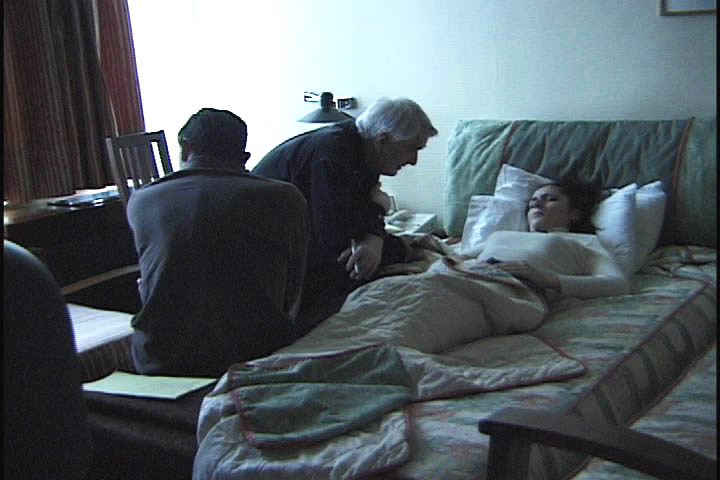
Ariel School sighting, Ruwa, Zimbabwe

About 60 children at the Ariel School outside Harare said they saw a craft land near the playground and figures beside it. A BBC crew filmed interviews days later, and Harvard psychiatrist John Mack interviewed pupils. Skeptics cite mass suggestion after a rocket re-entry fireball days earlier.

Close encounters

Donna Bassett says she faked abduction memories in John Mack's study

TIME reported that Donna Bassett, a Boston writer, said she invented an abduction story and faked hypnotic-regression sessions with Harvard psychiatrist John Mack, who she said asked leading questions. Mack cited patient confidentiality; she repeated the account at a skeptics' conference in 1995.

Photo: Becket01, CC BY-SA 4.0

Close encounters

John Mack publishes Abduction

Harvard Medical School psychiatrist John E. Mack published Abduction: Human Encounters with Aliens, drawn from his work with people who said they had been taken by aliens. Harvard reviewed his methods and in 1995 decided not to censure him, affirming his academic freedom.

Photo: Becket01, CC BY-SA 4.0

Close encounters

Meng Zhaoguo abduction claim, Wuchang, Heilongjiang

Chinese and foreign media reported that a craft had landed on Phoenix Mountain at a forest farm in Wuchang, and farm worker Meng Zhaoguo claimed he was abducted by aliens. Astronomer Liu Yan analyzed the accounts and in 1995 concluded it was likely hallucination or delusion if not invented.

Photo: Jay Fang, CC BY-SA 3.0

Close encounters

Carleton study finds UFO reporters psychologically typical

Psychologist Nicholas Spanos and colleagues at Carleton University reported in the Journal of Abnormal Psychology that UFO reporters scored no higher on psychopathology tests than comparison groups, but that intense experiences were more often sleep-related.

Close encounters

Kelly Cahill reports a UFO encounter and missing time near Narre Warren, Victoria

Kelly Cahill said that driving home near Melbourne she and her husband saw a lit craft, then lost time, later recalling tall dark figures. Researchers said people in another car gave similar accounts, but no report was released and those witnesses never went public.

Photo: Maksym Kozlenko, CC BY-SA 3.0

Close encounters

John Mack founds the Program for Extraordinary Experience Research

Harvard psychiatrist John E. Mack started PEER through his Center for Psychology and Social Change, with funding from Laurance Rockefeller, to study how reported alien encounters affected people's lives and worldviews, without trying to prove or disprove them. It ended in 2002.

Photo: Becket01, CC BY-SA 4.0

Close encounters

David Jacobs publishes 'Secret Life'

Temple University historian David M. Jacobs published Secret Life with Simon and Schuster, drawing on hypnotic-regression sessions with more than 60 people who said they were abducted. He argued abductions were real and widespread; critics questioned his reliance on hypnosis.

Photo: Hinata47d, CC BY-SA 4.0

Close encounters

Roper 'Unusual Personal Experiences' survey published

A report funded through Bigelow Holding Corporation analyzed 1991 Roper poll questions written by Budd Hopkins, David Jacobs and Ron Westrum. It projected that about 3.7 million Americans might be abductees. Critics such as Susan Blackmore said the questions did not measure abduction.

Photo: Carol Rainey, CC BY-SA 4.0

Close encounters

Kenneth Ring publishes 'The Omega Project'

University of Connecticut psychologist Kenneth Ring, known for near-death experience research, published The Omega Project, which set reports of near-death experiences alongside reports of UFO encounters and asked whether the two kinds of experiencer share traits.

Photo: Kenneth Ring, CC BY-SA 4.0

Close encounters

Study links UFO abductee and contactee reports to fantasy proneness

Robert Bartholomew, Keith Basterfield and George Howard reviewed biographies of 152 people who reported abductions or ongoing contact with UFO occupants. They found little history of mental illness but traits of a fantasy-prone personality in most cases, and urged clinicians to test for it.

Close encounters

Kottmeyer links Barney Hill's alien description to The Outer Limits

Writer Martin Kottmeyer argued in Magonia that the wraparound eyes Barney Hill described under hypnosis matched an alien in The Outer Limits episode 'The Bellero Shield', aired days before that session. Others dispute a single-episode source, and the link remains debated.

1980s

Close encounters

Linda Napolitano 'Manhattan' abduction claim

Linda Napolitano told researcher Budd Hopkins she was floated from her Lower East Side apartment into a craft. Hopkins cited letters from purported witnesses, including men claiming to guard a world leader. Investigators Hansen, Stefula and Butler published a detailed critique of the case.

Photo: Carol Rainey, CC BY-SA 4.0

Close encounters

First TREAT conference on abduction-related trauma

Psychiatrist Rima Laibow founded TREAT (Treatment and Research of Experienced Anomalous Trauma) and held its first conference at Fairfield University, bringing clinicians together to discuss people reporting abductions. She treated the symptoms as real while leaving their cause open.

Photo: Doc Searls, CC BY-SA 2.0

Close encounters

Philip Klass publishes 'UFO Abductions: A Dangerous Game'

Prometheus Books published aviation journalist Philip Klass's critique of abduction research, which traced the narrative from the Hill case and argued that hypnosis and media exposure produced the reports. Psychologist Robert A. Baker praised it in the Skeptical Inquirer.

Photo: Robert Sheaffer, CC BY-SA 3.0

Close encounters

Budd Hopkins publishes 'Intruders'

Random House published Budd Hopkins' Intruders, built on hypnosis sessions with an Indianapolis woman called 'Kathie Davis' and describing claims of alien-human interbreeding. Skeptic Philip Klass argued in the Skeptical Inquirer that leading questions under hypnosis shaped the accounts.

Photo: Carol Rainey, CC BY-SA 4.0

Close encounters

Whitley Strieber publishes Communion

Horror novelist Whitley Strieber published Communion, a first-person account of beings that he said probed him at his cabin in upstate New York. The book became a bestseller and a 1989 film, and made Strieber a widely known and widely doubted figure.

Photo: RobertoTenore, CC BY-SA 3.0

Close encounters

Bullard's comparative study of abduction reports

Folklorist Thomas E. Bullard, who earned his doctorate at Indiana University, catalogued about 300 abduction reports for the Fund for UFO Research in UFO Abductions: The Measure of a Mystery. He reported that the more reliable accounts shared many details of sequence and content.

Close encounters

J. Allen Hynek dies

Astronomer J. Allen Hynek, longtime scientific consultant to the Air Force UFO projects, died at 75 in Scottsdale, Arizona. He had become a critic of Blue Book's methods, founded the Center for UFO Studies and coined the 'close encounters' terms in his 1972 book.

Photo: United States Government, Public domain