Topic

Media

The books, broadcasts, films, podcasts and reporting that shaped what the public knows. 495 events, newest first.

1950s

Media

Flying Saucer Review founded in London

Former RAF pilot Derek Dempster founded Flying Saucer Review in London in 1955. A Gale reference entry says it was seen as uncritical under editor Brinsley le Poer Trench (1956-59) but later, under Charles Bowen, became one of the most influential UFO journals.

Media

'The War of the Worlds' wins the special-effects Oscar

At the 26th Academy Awards, held at the RKO Pantages Theatre in Hollywood, Paramount's 1953 Martian-invasion film The War of the Worlds won the award for Special Effects.

Photo: Illustrator unknown; Paramount Pictures, Public domain

Media

"Killers from Space" released

RKO released Killers from Space, a W. Lee Wilder film in which a scientist whose plane crashes near an atomic test wakes in an underground lair of bug-eyed aliens who have operated on him. It is an early screen version of a medical-examination abduction story.

Photo: film screenshot (RKO Radio Pictures), Public domain

Media

Civilian Saucer Intelligence of New York founded

Ted Bloecher and others founded Civilian Saucer Intelligence in New York City in January 1954. With Isabel Davis and Lex Mebane in its research section, the group became known for careful case work before its members moved on to NICAP.

Media

'Flying Saucer from Mars' contact book, later exposed as a hoax

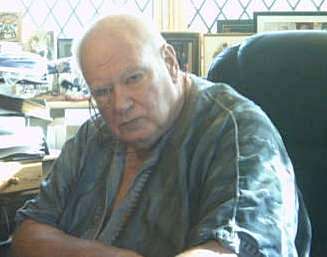
A book credited to Cedric Allingham claimed its author met a Martian pilot near Lossiemouth in February 1954. In 1986 researchers argued it was a spoof: Peter Davies admitted revising it and posing as Allingham, and they named astronomer Patrick Moore, who never admitted a role, as author.

Photo: David Scanlan, Public domain

Media

Paramount's The War of the Worlds opens

George Pal's production of H. G. Wells's The War of the Worlds, directed by Byron Haskin for Paramount, opened in New York on August 13, 1953, ahead of its general release in October. It adapted Wells's 1898 novel of a Martian invasion.

Photo: Illustrator unknown. "Copyright 1953 Paramount Pictures Corporation "., Public domain

Media

It Came from Outer Space premieres

Universal's first 3-D film, directed by Jack Arnold from a Ray Bradbury story, premiered in Los Angeles. Its stranded visitors want only to repair their ship and leave, a contrast to the hostile invaders of other saucer-era films.

Photo: Universal Pictures, Public domain

Media

'Phantom from Space' released

United Artists released W. Lee Wilder's 'Phantom from Space', in which radar tracks an unidentified object to Southern California and investigators hunt an invisible alien in the Los Angeles area. It was one of the low-budget films of the early saucer era.

Photo: W. Lee Wilder, Public domain

Media

Invaders from Mars premieres

William Cameron Menzies' color film, distributed by 20th Century-Fox, premiered in Detroit. A boy sees a saucer land behind his house and finds Martians controlling townspeople, including his parents, through devices implanted in their necks.

Photo: Twentieth Century-Fox, Public domain

Media

Donald Keyhoe publishes Flying Saucers from Outer Space

Donald Keyhoe's second UFO book appeared, built on Air Force case reports released to the press and arguing for an extraterrestrial origin. It hit bestseller lists; a CIA review called it highly distorted, and Ruppelt said its sighting details were accurate but its interpretations were not.

Photo: CBS, "The Mike Wallace Interview" 1958 March 8, Public domain

Media

Harvard astronomer Donald Menzel publishes 'Flying Saucers'

Harvard astrophysicist Donald Menzel published Flying Saucers through Harvard University Press, arguing that most reports were mirages and other optical effects. The Condon Report later called it an excellent book while noting its reputation as a debunking one.

Photo: Babette Whipple, CC BY-SA 3.0

Media

True magazine exposes the Aztec crashed-saucer story as a con

Writer J. P. Cahn's True magazine article showed that the crashed-saucer tale in Frank Scully's bestseller traced to Silas Newton and Leo GeBauer, the book's 'Dr. Gee'. Their 'alien' metal tested as ordinary aluminum, and both were arrested that fall in an oil-detector fraud case.

Media

German press runs Spitsbergen 'crashed saucer' story (hoax)

German newspapers, starting with the Saarbrucker Zeitung, reported that Norway's military had recovered a flying saucer on Spitsbergen. The story grew with each retelling and was never verified; researchers regard it as a hoax with no basis in any official record.

Photo: Wilson44691, Public domain

Media

"Red Planet Mars" released

United Artists released Red Planet Mars, a Cold War drama in which an American scientist makes radio contact with Mars and the replies upend world politics. It reached theaters during the record 1952 wave of U.S. saucer reports.

Media

Life magazine suggests saucers may come from space

A Life magazine article researched by Bob Ginna raised the possibility that saucers were interplanetary, quoting scientists who took the idea seriously. Ruppelt, then Blue Book chief, wrote that senior Pentagon officers had unofficially encouraged it.

Media

Donald Menzel becomes director of Harvard College Observatory

Astrophysicist Donald Menzel became head of the Harvard College Observatory, acting director from 1952 and director from 1954 until 1966. A National Academy of Sciences memoir credits his analysis of UFO reports with helping debunk claims of extraterrestrial visits.

Photo: The original uploader was Fdavis99 at English Wikipedia ., CC BY-SA 3.0