Culture and science

Books

The books that shaped how the public sees UFOs. 176 events, newest first.

1960s

Media

Ruppelt's revised UFO book adds chapters calling UFOs a 'Space Age Myth'

The second edition of former Blue Book chief Edward Ruppelt's The Report on Unidentified Flying Objects added three chapters reviewing later cases and ending with a far more skeptical view, closing on the phrase 'our Space Age Myth - the UFO'.

Photo: Associated Press, Public domain

1950s

Media

Carl Jung publishes 'Flying Saucers: A Modern Myth'

Swiss psychiatrist C. G. Jung published Ein moderner Mythus, later translated as Flying Saucers: A Modern Myth of Things Seen in the Skies. Jung set aside whether saucers were physical craft and treated the wave of sightings as a psychological and cultural response to an anxious era.

Photo: Francis Domiano, CC0

Media

Aime Michel's 'orthoteny' study of the 1954 French wave

French writer Aime Michel's 1958 book, published in English as Flying Saucers and the Straight-Line Mystery, argued that same-day sightings in the 1954 French wave fell on straight lines. Astronomer Donald Menzel later argued the alignments matched chance.

Military

Army patrols report lights at White Sands

Two U.S. Army patrols at White Sands reported a very bright light near the horizon and later a pulsating light, hours after the Levelland reports made national news. Project Blue Book concluded the first sighting was the setting Moon and the second was Venus.

Photo: Project Blue Book, Public domain

Sightings

November 1957 wave of UFO reports

Project Blue Book logged 361 reports in November 1957, one of its busiest months, helping make 1957 the only year from 1953 to 1965 with over a thousand reports. The surge came days after Sputnik 2 and included Levelland, Texas and a White Sands report the Air Force publicly addressed.

Photo: U.S. Air Force, Public domain

Media

Earth vs. the Flying Saucers released

Columbia released Earth vs. the Flying Saucers, a science fiction film with saucer effects by Ray Harryhausen. Its credits say it was suggested by Donald Keyhoe's book Flying Saucers from Outer Space.

Photo: american film trailer screenshot (Columbia Pictures), Public domain

Media

Ruppelt publishes The Report on Unidentified Flying Objects

Edward Ruppelt, former head of the Air Force's Project Blue Book, published an inside account of its UFO investigations with Doubleday. In the book he wrote that he created the term 'UFO' to replace 'flying saucers'.

Photo: Associated Press, Public domain

Media

Donald Keyhoe publishes 'The Flying Saucer Conspiracy'

Retired Marine Maj. Donald Keyhoe's third UFO book, published by Henry Holt, charged that the Pentagon was keeping what it knew about UFOs from the public. Kirkus described it as his case for official secrecy, unexplained air crashes and sightings.

Photo: CBS, "The Mike Wallace Interview" 1958 March 8, Public domain

Government

Air Force Secretary Quarles releases Blue Book statistical study to the public

Air Force Secretary Donald Quarles made public the Battelle statistical analysis of saucer reports (Special Report 14), saying the Air Force found no sign of technology beyond known science. Critics later argued the study's 'unknowns' were not resolved by the data.

Photo: United States Air Force, Public domain

Government

Project Blue Book Special Report No. 14

Blue Book Special Report No. 14, a statistical analysis of about 3,200 reports through 1952 carried out with Battelle Memorial Institute, judged it highly improbable that the unidentified cases reflected technology beyond known science. The Air Force made it public in October 1955.

Photo: US Air Force, Public domain

Media

'Flying Saucer from Mars' contact book, later exposed as a hoax

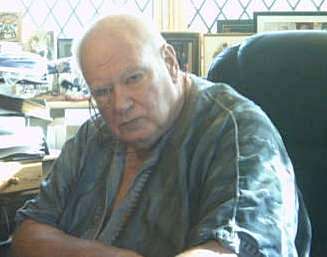
A book credited to Cedric Allingham claimed its author met a Martian pilot near Lossiemouth in February 1954. In 1986 researchers argued it was a spoof: Peter Davies admitted revising it and posing as Allingham, and they named astronomer Patrick Moore, who never admitted a role, as author.

Photo: David Scanlan, Public domain

Government

Air Force Regulation 200-2 issued

The Air Force issued AFR 200-2, 'Unidentified Flying Objects Reporting', setting how bases report and investigate sightings. Its 1954 revision let officials discuss a case with the press only once the object was identified as familiar; AFR 200-2 governed Project Blue Book into the 1960s.

Photo: United States Air Force, Public domain

Military

Ellsworth AFB radar-visual case

A Ground Observer Corps spotter near Rapid City reported a bright light that Ellsworth AFB radar then tracked; an F-84 pilot chased it and reported a radar lock before breaking off. Blue Book chief Edward Ruppelt, who investigated in person, called it the best report in the Air Force files.

Photo: Staff Sgt. Marc I. Lane, U.S. Air Force, Public domain

Media

Donald Keyhoe publishes Flying Saucers from Outer Space

Donald Keyhoe's second UFO book appeared, built on Air Force case reports released to the press and arguing for an extraterrestrial origin. It hit bestseller lists; a CIA review called it highly distorted, and Ruppelt said its sighting details were accurate but its interpretations were not.

Photo: CBS, "The Mike Wallace Interview" 1958 March 8, Public domain

Media

Harvard astronomer Donald Menzel publishes 'Flying Saucers'

Harvard astrophysicist Donald Menzel published Flying Saucers through Harvard University Press, arguing that most reports were mirages and other optical effects. The Condon Report later called it an excellent book while noting its reputation as a debunking one.

Photo: Babette Whipple, CC BY-SA 3.0

Military

Air Defense Command's 4602nd AISS takes on UFO field investigations

With Project Blue Book short of staff, its chief Edward Ruppelt arranged for the Air Defense Command's 4602nd Air Intelligence Service Squadron, a unit with field teams across the U.S., to investigate UFO reports. Blue Book would then analyze cases the teams could not explain.

Photo: U.S. government (NORAD Office of History), Public domain

Military

Edward Ruppelt leaves Project Blue Book

Capt. Edward Ruppelt, who had run the Air Force's UFO project through the 1952 wave, left Project Blue Book and the Air Force in 1953. His 1956 book says he asked for a transfer in December 1952, no replacement came, and he was again handling Blue Book cases in August 1953.

Photo: Associated Press, Public domain

Government

Blue Book reports astronomer survey: 5 of 44 saw unexplained objects

Project Blue Book's Status Report No. 8 summarized summer 1952 conferences its contract astronomer, J. Allen Hynek, held with 44 professional astronomers. Five had seen things they could not readily explain; most were neither hostile nor very interested in the subject.

Photo: Unknown author, Public domain

Close encounters

George Adamski's Desert Center contact claim

George Adamski claimed he met a man from Venus beside a landed scout ship near Desert Center, California, after leaving six companions down the road. His 1953 book with Desmond Leslie told the story and sold widely; Blue Book chief Ruppelt recounted it with open skepticism.

Photo: Los Angeles Times, CC BY 4.0

Media

True magazine exposes the Aztec crashed-saucer story as a con

Writer J. P. Cahn's True magazine article showed that the crashed-saucer tale in Frank Scully's bestseller traced to Silas Newton and Leo GeBauer, the book's 'Dr. Gee'. Their 'alien' metal tested as ordinary aluminum, and both were arrested that fall in an oil-detector fraud case.