Culture and science

Interstellar objects and SETI

The search for alien signals and technology, from Project Ozma to Oumuamua and 3I/ATLAS. 52 events, newest first.

2010s

Government

China opens FAST radio telescope, citing a search for alien signals

China's state news agency Xinhua reported the opening of the 500-meter FAST radio telescope in Guizhou, then the world's largest single-dish radio telescope. Chinese astronomers said its work would include studying possible interstellar communication signals.

Photo: NASA/METI/AIST/Japan Space Systems, and U.S./Japan ASTER Science Team, Public domain

Media

Russian observatory attributes RATAN-600 'SETI signal' to Earth

A brief radio signal recorded in 2015 by Russia's RATAN-600 telescope toward the star HD 164595 drew headlines as a possible SETI candidate. In late August 2016 Russian astronomers said it was most likely terrestrial interference, with one official pointing to a military satellite.

Photo: aleksandr s kavkaza (Panoramio), CC BY 3.0

Media

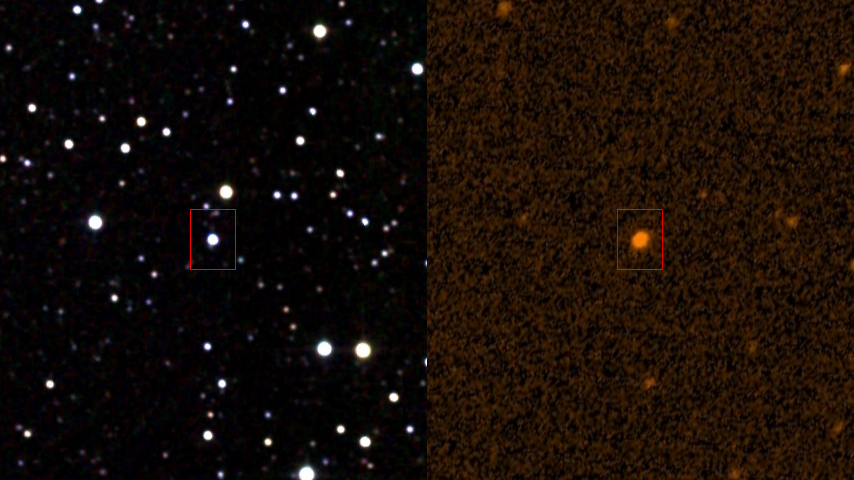
Tabby's Star dimming prompts 'alien megastructure' talk

Kepler data on star KIC 8462852 showed deep, irregular dips, and in October 2015 Penn State astronomer Jason Wright and colleagues called it a strong SETI target, sparking 'alien megastructure' headlines. A 2018 study led by Tabetha Boyajian found the dimming was most likely dust.

Photo: Infrared: IPAC/NASA Ultraviolet: STScI (NASA), Public domain

Media

Breakthrough Listen announced with $100 million

Investor Yuri Milner, joined by Stephen Hawking at the Royal Society in London, announced Breakthrough Listen, a privately funded $100 million, 10-year search for signals from other civilizations using the Green Bank and Parkes radio telescopes and an optical telescope at Lick Observatory.

Photo: TechCrunch, CC BY 2.0

Government

Allen Telescope Array put into hibernation for lack of funds

The 42-dish Allen Telescope Array, built by UC Berkeley and the SETI Institute largely with Paul Allen's money, was put into hibernation in April 2011 when funding ran out. Private donations let it resume observing in December 2011.

Photo: brewbooks from near Seattle, USA, CC BY-SA 2.0

2000s

Media

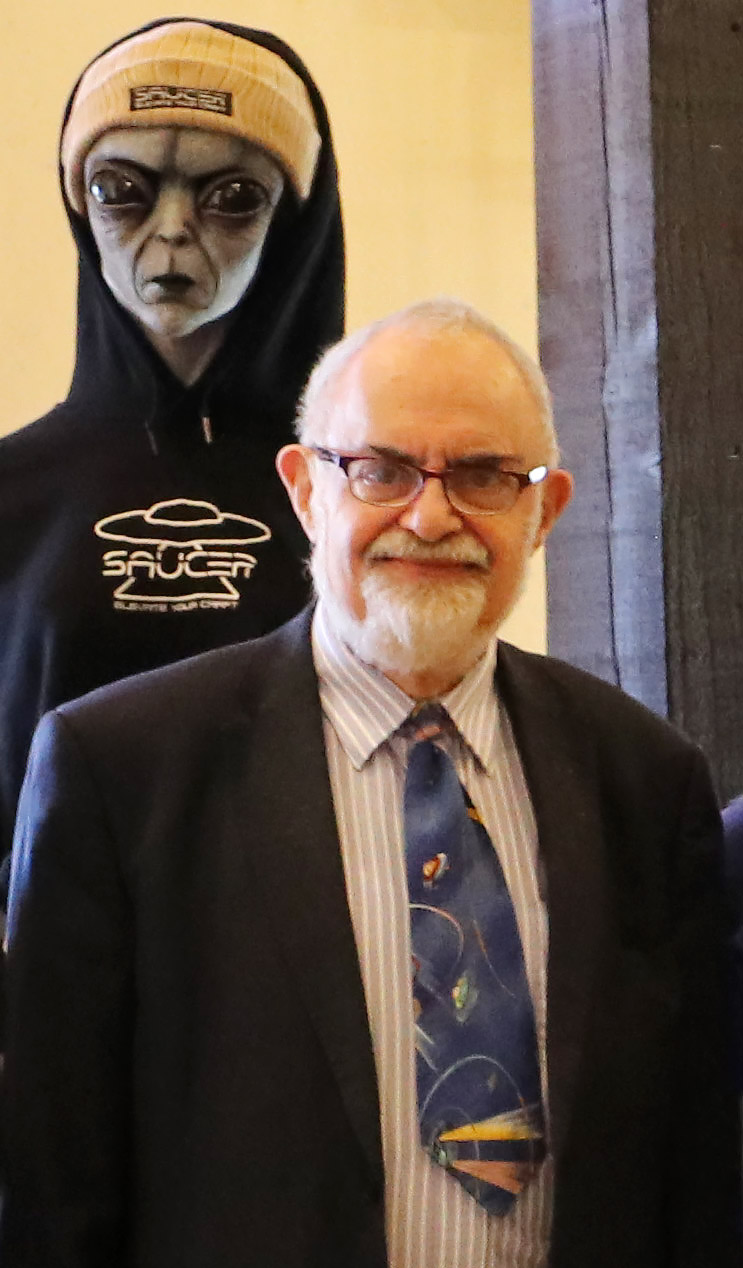
Stanton Friedman publishes 'Flying Saucers and Science'

Nuclear physicist and UFO lecturer Stanton Friedman published 'Flying Saucers and Science' with New Page Books, arguing that interstellar travel is feasible and criticizing scientists who dismiss UFO evidence and government secrecy.

Photo: SMG2019, CC BY-SA 4.0

Sightings

Allen Telescope Array dedicated at Hat Creek

UC Berkeley and the SETI Institute dedicated the first 42 dishes of the Allen Telescope Array in northern California, a radio telescope designed to do astronomy and search for signals from extraterrestrial civilizations at the same time. Paul G. Allen's foundation provided seed money.

Photo: brewbooks from near Seattle, USA, CC BY-SA 2.0

Sightings

First dedicated optical SETI telescope opens at Harvard's Oak Ridge Observatory

The Planetary Society and Harvard dedicated a 72-inch telescope at Oak Ridge Observatory in Harvard, Massachusetts, built only to look for brief laser-like flashes that could come from other civilizations. Physicist Paul Horowitz led the project, which surveyed the northern Milky Way.

Photo: Daderot, Public domain

Media

Rio Scale proposed for rating claimed ET detections

Astronomers Ivan Almar and Jill Tarter proposed a 0 to 10 scale for rating the importance and credibility of any announced evidence of extraterrestrial intelligence, at a 2000 congress in Rio de Janeiro. The IAA SETI committee adopted it in 2002.

Photo: Attila Magyar - Kossuth kiado, CC BY-SA 3.0

1990s

Media

SETI@home launches

UC Berkeley's SETI@home project went public, letting volunteers' home computers search Arecibo radio telescope data for narrow-band signals that might come from another civilization. About a million people joined quickly; no confirmed signal was found.

Photo: Alberthuang2 ( talk ), CC BY-SA 3.0

Media

Film 'Contact' released

Warner Bros. released Contact, Robert Zemeckis's adaptation of Carl Sagan's novel, starring Jodie Foster as a radio astronomer who detects a signal from the star Vega. It framed alien contact through radio searches rather than saucers.

Photo: NASA, Public domain

Media

SETI League launches amateur all-sky search Project Argus

The SETI League, a volunteer group formed after Congress ended NASA's SETI funding, put Project Argus online on Earth Day 1996. It linked amateur radio telescopes, many built from old satellite TV dishes, aiming at real-time coverage of the whole sky.

Media

The Arrival released

David Twohy's The Arrival starred Charlie Sheen as a SETI radio astronomer who detects an alien signal, is fired, and uncovers aliens disguised as humans who are secretly warming Earth. It was overshadowed by Independence Day, released soon after.

Photo: Angela George, CC BY-SA 3.0

Media

SETI Institute's privately funded Project Phoenix begins

After Congress ended NASA's SETI program in 1993, the SETI Institute continued its targeted search with private donations as Project Phoenix, starting at the Parkes telescope. Through 2004 it examined about 800 nearby stars and reported no extraterrestrial signals.

Photo: division, CSIRO, CC BY 3.0

Government

Congress ends NASA's SETI program

The Senate adopted Sen. Richard Bryan's amendment cutting NASA's search for extraterrestrial intelligence, then called the High Resolution Microwave Survey. House and Senate conferees left $1 million for shutdown costs, ending federal funding; the SETI Institute continued privately.

Photo: Biographical Directory of the United States Congress, Public domain

1980s

Media

SETI community adopts first post-detection protocol

The International Academy of Astronautics adopted a Declaration of Principles for what to do if a signal from extraterrestrial intelligence is found: verify it first, notify other observers and the UN, announce openly, and send no reply before international consultation.

Media

Harvard's Project META radio search starts with Spielberg funding

Physicist Paul Horowitz's Project META, an 8.4-million-channel receiver listening for radio signals from other civilizations, came online at Harvard's Oak Ridge field station. Steven Spielberg gave $100,000 for the equipment, and The Planetary Society sponsored the search.

Photo: ServiceAT, CC BY-SA 3.0

Government

Hal Puthoff founds the Institute for Advanced Studies at Austin

Physicist Harold Puthoff founded the Institute for Advanced Studies at Austin, a lab studying the quantum vacuum, gravity and interstellar flight science in relation to space propulsion and energy. It was incorporated under EarthTech International in 1991.

Media

SETI Institute founded

Thomas Pierson and astronomer Jill Tarter founded the SETI Institute, a nonprofit to research life beyond Earth. After Congress ended NASA's SETI program in 1993, the institute carried the radio search on with private funds as Project Phoenix.

Photo: Eugene Zelenko, CC BY-SA 4.0

Media

Sagan's international SETI petition published in Science

Carl Sagan and 68 other scientists, among them seven Nobel laureates, published a petition in Science urging a coordinated worldwide radio search for extraterrestrial intelligence, arguing the question could only be settled by observation.

Photo: Kenneth C. Zirkel, CC BY-SA 4.0

Media

Sagan, Murray and Friedman found The Planetary Society

Carl Sagan, Bruce Murray and Louis Friedman founded The Planetary Society, a member-funded space advocacy group. By its own account members began funding SETI research in its first year, and it later sponsored Harvard searches such as Project META.

Photo: credit NASA JPL, Public domain

1970s

Government

Sen. Proxmire gives NASA's SETI proposal a Golden Fleece award

Sen. William Proxmire gave NASA's proposed radio search for extraterrestrial signals his Golden Fleece award for wasteful spending. The funding was then removed from NASA's fiscal 1979 budget; a House subcommittee held the first congressional SETI hearings that September.

Photo: United States Senate Historical Office, Public domain

Media

Arecibo message beamed toward the M13 star cluster

At a ceremony marking an upgrade of the Arecibo radio telescope in Puerto Rico, scientists beamed a short pictorial radio message toward the globular cluster M13, about 21,000 light-years away. The SETI Institute notes a reply is unlikely ever to come.

Photo: Arne Nordmann ( norro ), CC BY-SA 3.0

Government

NASA's Project Cyclops SETI design study

A NASA-sponsored team led by Bernard Oliver, with John Billingham as co-chair, spent ten weeks in summer 1971 designing a large radio array to detect signals from extraterrestrial civilizations. The resulting Project Cyclops report weighed costs, search strategy and signal processing.

1960s

Media

Nikolai Kardashev proposes ranking civilizations by energy use

Soviet astronomer Nikolai Kardashev published 'Transmission of Information by Extraterrestrial Civilizations', classing hypothetical civilizations by the energy they can harness. The Kardashev scale remains a common reference in SETI and technosignature work.

Photo: Rights NRAO/AUI/NSF Photographer Woodruff T. Sullivan III Photo Credit NRAO/AUI Archives,..., CC BY 4.0