Culture and science

Science and research

Scientific studies, academic projects, panels and surveys. 281 events, newest first.

1950s

Sightings

Levelland, Texas sightings

Over about two hours, drivers near Levelland reported a large glowing object and said their engines and headlights failed as it passed. The Air Force attributed the reports to ball lightning; physicist James McDonald later told Congress no storms were near that night.

Photo: Leaflet, CC BY-SA 3.0

Sightings

Ground Saucer Watch founded

Ground Saucer Watch, a civilian UFO group of scientists, engineers and laypeople, formed in 1957 to study UFO reports with technical methods. It later pursued lawsuits and Freedom of Information Act requests for government UFO files before folding over money problems.

Media

"It Conquered the World" released

American International Pictures released Roger Corman's It Conquered the World, in which a scientist in radio contact with Venus helps a creature from that planet try to take over Earth. Paul Blaisdell designed and wore the alien costume.

Photo: American International Pictures, Public domain

Media

'This Island Earth' premieres

Universal-International's Technicolor science-fiction film, in which an alien recruits Earth scientists for his war-torn planet Metaluna, had its world premiere in New York. It was one of the bigger-budget entries in the 1950s alien-film cycle.

Photo: Universal-International, Public domain

Sightings

Florence stadium sighting halts a football match

Play stopped during a Fiorentina-Pistoiese match when about 10,000 spectators and players watched objects cross the sky and a filmy 'angel hair' fall. A University of Florence lab reported boron, silicon, calcium and magnesium in samples; skeptics suggest migrating spider silk.

Media

'The War of the Worlds' wins the special-effects Oscar

At the 26th Academy Awards, held at the RKO Pantages Theatre in Hollywood, Paramount's 1953 Martian-invasion film The War of the Worlds won the award for Special Effects.

Photo: Illustrator unknown; Paramount Pictures, Public domain

Media

"Killers from Space" released

RKO released Killers from Space, a W. Lee Wilder film in which a scientist whose plane crashes near an atomic test wakes in an underground lair of bug-eyed aliens who have operated on him. It is an early screen version of a medical-examination abduction story.

Photo: film screenshot (RKO Radio Pictures), Public domain

Close encounters

Unarius Academy of Science founded

Ernest and Ruth Norman started Unarius in southern California in 1954, teaching past-life therapy and channeled messages from extraterrestrial 'Space Brothers'. Later based in El Cajon, the group predicted a fleet landing in 2001 that did not occur; scholars study it as a UFO religion.

Media

'Flying Saucer from Mars' contact book, later exposed as a hoax

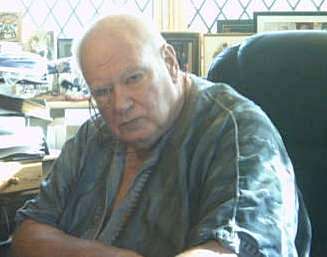
A book credited to Cedric Allingham claimed its author met a Martian pilot near Lossiemouth in February 1954. In 1986 researchers argued it was a spoof: Peter Davies admitted revising it and posing as Allingham, and they named astronomer Patrick Moore, who never admitted a role, as author.

Photo: David Scanlan, Public domain

Government

Robertson Panel

A CIA-convened panel of scientists chaired by physicist H. P. Robertson reviewed UFO reports and found no direct threat to national security. It recommended training and public education to strip the subject of its special status.

Media

Harvard astronomer Donald Menzel publishes 'Flying Saucers'

Harvard astrophysicist Donald Menzel published Flying Saucers through Harvard University Press, arguing that most reports were mirages and other optical effects. The Condon Report later called it an excellent book while noting its reputation as a debunking one.

Photo: Babette Whipple, CC BY-SA 3.0

Government

Blue Book reports astronomer survey: 5 of 44 saw unexplained objects

Project Blue Book's Status Report No. 8 summarized summer 1952 conferences its contract astronomer, J. Allen Hynek, held with 44 professional astronomers. Five had seen things they could not readily explain; most were neither hostile nor very interested in the subject.

Photo: Unknown author, Public domain

Government

Intelligence Advisory Committee agrees to a scientific UFO review

At the CIA director's request the Intelligence Advisory Committee discussed UFOs and agreed the DCI should enlist selected scientists to review the evidence and draft a security directive. Air Force intelligence chief Maj. Gen. John Samford offered cooperation; the review became the Robertson Panel.

Government

Chadwell memo urges NSC action on UFOs

CIA science intelligence chief H. Marshall Chadwell sent the Director of Central Intelligence a memo urging National Security Council attention to UFOs and outside scientific study. Two days later an intelligence advisory committee agreed to convene scientists, which became the Robertson Panel.

Photo: US Government, Public domain

Government

CIA study group under Edward Tauss recommends continued UFO monitoring

Reporting for a CIA study group formed after the 1952 sighting wave, Edward Tauss of the Office of Scientific Intelligence found most sightings easily explained but advised continued monitoring with the Air Force, while keeping CIA interest from the press and public.

Government

CIA's Ralph Clark memo on 'Recent Sightings of Unexplained Objects'

Days after the Washington radar sightings, Ralph L. Clark, acting head of the CIA's Office of Scientific Intelligence, sent the Deputy Director for Intelligence a memo on recent unexplained sightings. The CIA's own history says the agency then formed a special OSI study group on the reports.

Media

"Red Planet Mars" released

United Artists released Red Planet Mars, a Cold War drama in which an American scientist makes radio contact with Mars and the replies upend world politics. It reached theaters during the record 1952 wave of U.S. saucer reports.

Media

Life magazine suggests saucers may come from space

A Life magazine article researched by Bob Ginna raised the possibility that saucers were interplanetary, quoting scientists who took the idea seriously. Ruppelt, then Blue Book chief, wrote that senior Pentagon officers had unofficially encouraged it.

Government

Canada's Project Second Storey

Canada's Defence Research Board set up Project Second Storey, an advisory committee on flying saucer reports chaired by Dominion Observatory astronomer Peter Millman, which ran from 1952 to 1954. It did not investigate sightings itself but worked on a standard reporting form.

Photo: NRAO/AUI/NSF, photo by Woodruff T. Sullivan III, CC BY 4.0

Media

Donald Menzel becomes director of Harvard College Observatory

Astrophysicist Donald Menzel became head of the Harvard College Observatory, acting director from 1952 and director from 1954 until 1966. A National Academy of Sciences memoir credits his analysis of UFO reports with helping debunk claims of extraterrestrial visits.

Photo: The original uploader was Fdavis99 at English Wikipedia ., CC BY-SA 3.0

Sightings

Lubbock Lights

Texas Tech professors reported formations of soft glowing lights over Lubbock, and student Carl Hart Jr. photographed a formation days later. Blue Book's Edward Ruppelt investigated; birds reflecting new streetlights was the main lead, but he reached no firm conclusion on the photos.

Government

UK Flying Saucer Working Party report

A small Ministry of Defence scientific intelligence working party set up in 1950 delivered a secret report concluding that saucer sightings were misidentified aircraft, balloons, astronomical objects, illusions or hoaxes, and advised against further study without material evidence.

Photo: Bernard Hailstone, Public domain

Media

Frank Scully's 'Behind the Flying Saucers' (later exposed as a con)

Columnist Frank Scully's book claimed government scientists had recovered crashed saucers with small occupants, citing oilman Silas Newton and a 'Dr. Gee'. In 1952 Denver authorities charged Newton and the man said to be Dr. Gee in an oil-device swindle, discrediting the story.

Photo: Unknown author, Public domain

Sightings

Lowell Observatory astronomer Seymour Hess reports a disc

Astronomer Seymour Hess said that while walking the Lowell Observatory grounds at lunch he followed a small round gray object with a 4-power telescope as it passed in front of a cloud, traveling at right angles to the wind. Asked by reporters, Williams Air Force Base said it knew of nothing like it.

Photo: Mukhtiaraliunar, CC BY-SA 4.0