Culture and science

Science and research

Scientific studies, academic projects, panels and surveys. 281 events, newest first.

1960s

Government

Felix Zigel's televised appeal for Soviet UFO reports

Moscow Aviation Institute astronomer Felix Zigel appeared on Soviet television asking viewers for UFO reports. In November 1967 AP reported that a commission led by Air Force Gen. Stolyarov was studying UFOs; the group was closed after about five months.
Government

Physicist James McDonald addresses the UN Outer Space Affairs Group

University of Arizona atmospheric physicist James E. McDonald presented a paper titled 'International Scientific Aspects of the Problem of Unidentified Flying Objects' to the United Nations Outer Space Affairs Group in New York.

Photo: United States Government, Public domain

Government

Physicist James McDonald investigates UFO reports in Australia

University of Arizona atmospheric physicist James McDonald spent late June and early July 1967 in Australia recording interviews with UFO witnesses. Reuters reported him saying in Sydney that governments, backed by the CIA, were downplaying the subject.

Photo: United States Government, Public domain

Sightings

Falcon Lake incident (Stefan Michalak)

Amateur prospector Stefan Michalak said a landed craft near Falcon Lake, Manitoba, vented hot gas that set his shirt alight and left grid-shaped burns. The RCMP and RCAF investigated, a University of Colorado team studied it for the Air Force, and no definitive explanation was reached.

Photo: Jd.101, CC BY-SA 3.0

Close encounters

Physicist James McDonald tells newspaper editors UFOs were mishandled

University of Arizona atmospheric physicist James E. McDonald told the American Society of Newspaper Editors that the UFO problem had been mishandled for years. He blamed a 1953 CIA-sponsored panel's recommendation for a debunking effort and said Project Blue Book had been downgraded.

Photo: United States Government, Public domain

Media

Hynek's 'Are Flying Saucers Real?' in the Saturday Evening Post

In a national magazine, Air Force consultant J. Allen Hynek wrote that most UFO reports had ordinary explanations but a small residue remained puzzling. He criticized how the Air Force handled the subject, called for real scientific study and said he had seen no evidence of a deliberate cover-up.

Photo: United States Government, Public domain

Close encounters

Hynek's letter 'UFO's Merit Scientific Study' in Science

J. Allen Hynek, the Air Force's own scientific consultant on UFOs, published a letter in the journal Science urging scientists to give unexplained reports serious, scholarly study rather than dismissing the subject.

Photo: United States Government, Public domain

Government

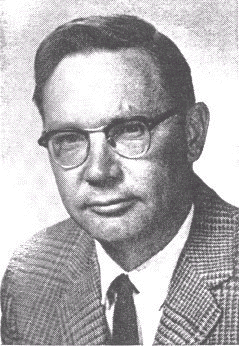
Air Force contracts University of Colorado for UFO study

The Air Force Office of Scientific Research announced a contract with the University of Colorado for an independent scientific study of UFOs, the project whose final report physicist Edward Condon summarized. The first contract gave $313,000 for 15 months starting November 1, 1966.

Photo: National Institute of Standards and Technology, Public domain

Media

Shklovskii and Sagan publish 'Intelligent Life in the Universe'

Holden-Day published Intelligent Life in the Universe, Carl Sagan's expanded translation of a book by Soviet astronomer I. S. Shklovskii. It weighed the odds of life elsewhere, radio contact, and claims of past alien visits to Earth.

Photo: A. T. Service, CC BY-SA 3.0

Media

TASS reports possible alien signal from radio source CTA-102

After Gennady Sholomitsky reported that radio source CTA-102 varied in brightness, TASS reported that Soviet scientists may have found a signal from a civilization, a story that spread worldwide. CTA-102 was soon identified as a quasar, a natural source.

Photo: Aladin Sky Server, Public domain

Media

Jacques Vallee publishes Anatomy of a Phenomenon

Astronomer and computer scientist Jacques Vallee published Anatomy of a Phenomenon, which classified historical and modern UFO reports and argued they deserved systematic analysis. Kirkus called it a usable manual of analytical methods for general readers.

Photo: Christopher Michel, CC BY-SA 4.0

Media

Nikolai Kardashev proposes ranking civilizations by energy use

Soviet astronomer Nikolai Kardashev published 'Transmission of Information by Extraterrestrial Civilizations', classing hypothetical civilizations by the energy they can harness. The Kardashev scale remains a common reference in SETI and technosignature work.

Photo: Rights NRAO/AUI/NSF Photographer Woodruff T. Sullivan III Photo Credit NRAO/AUI Archives,..., CC BY 4.0

Media

Menzel and Boyd publish 'The World of Flying Saucers'

Harvard astronomer Donald Menzel and Lyle Boyd published 'The World of Flying Saucers' with Doubleday, Menzel's second skeptical UFO book. It argued that reports from Kenneth Arnold onward could be explained by natural phenomena, misperception and atmospheric effects.

Photo: Fdavis99 at English Wikipedia, CC BY-SA 3.0

Close encounters

British UFO Research Association (BUFORA) formed

Several British UFO research groups and individuals came together at an inaugural meeting in Kensington, London, to form the British UFO Research Association, which describes itself as a non-cultist, scientifically evaluative body.

Media

Green Bank meeting introduces the Drake equation

Ten scientists, including Frank Drake, Carl Sagan and Philip Morrison, met at the Green Bank radio observatory for the National Academy of Sciences' Space Science Board. Drake's equation, used to frame the talks, became the standard way to estimate how many civilizations might exist.

Photo: Raphael Perrino, CC BY 2.0

Sightings

Bruderheim fireball and meteorite fall, Alberta

A bright fireball and detonation over central Alberta in the early morning was seen by hundreds of people. Nearly 700 stones were then recovered near Bruderheim, the largest meteorite fall recovered in Canada, most of them by the University of Alberta.

Government

J. Allen Hynek becomes chair of Northwestern's astronomy department

Astronomer J. Allen Hynek, the Air Force's scientific consultant on UFO reports, chaired Northwestern University's astronomy department and directed its Dearborn Observatory from 1960 to 1978, the base for his later UFO research.

Photo: United States Government, Public domain

1950s

Media

Cocconi and Morrison propose searching for interstellar radio signals

Cornell physicists Giuseppe Cocconi and Philip Morrison argued in Nature that radio telescopes could detect deliberate signals from other civilizations, suggesting a search near the 21 cm hydrogen line. The paper is widely regarded as the scientific starting point of SETI.

Photo: NASA, Public domain

Media

'The Cosmic Man' released

Allied Artists released 'The Cosmic Man', in which a white globe-shaped craft hovers near a California resort and the military and scientists argue over the intentions of its shadowy alien visitor, played by John Carradine.

Photo: Allied Artists, Public domain

Media

BBC begins the serial Quatermass and the Pit

BBC Television began Nigel Kneale's six-part serial Quatermass and the Pit just before Christmas 1958. In the story, London builders unearth an ancient Martian craft, and Professor Quatermass concludes Martians once altered early human ancestors. It is fiction, not a reported case.

Media

Aime Michel's 'orthoteny' study of the 1954 French wave

French writer Aime Michel's 1958 book, published in English as Flying Saucers and the Straight-Line Mystery, argued that same-day sightings in the 1954 French wave fell on straight lines. Astronomer Donald Menzel later argued the alignments matched chance.

Media

'The Brain from Planet Arous' released

Howco International released this low-budget science fiction film, in which a criminal alien brain from the planet Arous takes over a scientist's body and threatens Earth. The AFI Catalog lists a December 1957 release with a Los Angeles opening on Christmas Day.

Photo: Howco International, Public domain